


Red Bull Air Race 2008
May 5, 2008
US Navy and Coast Guard
The Red Bull Air Races were held May 3rd and 4th, 2008 in San Diego California. We were able to attend on the 4th and take many great pictures. Before the races themselves started there were many side acts and flybys. San Diego is home to many Naval Ships and has a huge military presence. I’ve been to air shows before but none of those compared to this in terms of how close we were to the action and how slow the flybys were. In this photo you can see the heritage flight formation where older aircraft fly side by side with the current generation fighter jets. It’s funny to think that the F-18 will soon be one of the old aircraft too. The first thing you notice here is that the other two planes are propeller driven. The F-18 can fly really slow. How slow? Well so slow you think it’s hovering when you are looking at it from the ground up. The pilot does this by flying at a high angle of attack. The F-18 has the ability to fly at an almost unlimited angle of attack. That means that the wings are pointed up in relation to the air stream and the movement of the aircraft. So why am I telling you all of this? Well of course because the pilot did
 such a low-speed, high angle of attack flyby. In this photo you can see the pilot tipping the wing right after powering up from the low-speed flyby.
The demonstrations were not limited to fighter jets though. The Coast Guard demonstrated a hoist rescue as you can see in this photo. These helicopters are huge and being underneath one is like being in a small hurricane. I found this out first hand as one flew right by the shore and then leaned left. Jamie’s hat flew about 50 feet.
And last but not least is the crazy maneuver of the Navy divers who hook themselves onto a tether and get pulled out of the water by a seahawk while using no hands. All I have to say is that these guys are nuts! I also wonder how they get down from there. I guess I will never know. Now to the racing itself.
Smoke On!
When the planes prepare to enter the course the air control tells the pilot “smoke on” which tells them to turn on the smoke so the officials can see the flight line and to enter the course. The course is just over 3.5 miles long but it is contained in an area of about 1 square mile.  These highly advanced aerobatic prop planes fly at or sometimes over 300 mph. This makes for a very exciting race. The course is defined by a series of air gates. These are conical towers made of a very thin nylon and inflated with air. If a plane collides with a gate it just bursts apart leaving the plane undamaged.
Here you can see what they call the “Quadro” where four air gates are used. The pilots fly through this group of gates twice in two different directions.  Since it was so bright outside, shooting these planes was easy… except tracking them was hard. These things moved really, really fast!
Here is a photo of the winner. His name is Paul Bonhomme  from Britain and he beat American Mike Mangold in the final by just over a second. See more great shots in the Gallery.
Fiesta of the Spanish Horse 2008
May 5, 2008
A Noble Event
Every year one event brings together excitement and horses and fund raising for a good cause. All the proceeds from each years event goes to the American Cancer Society, the USC Norris Cancer Center, and the Roy and Patricia Disney Cancer Center. The Extravaganza is where the best acts and the most polished Spanish horse breeds are shown off. Photographing this event is challenging. This year we sat in the box seats to get a close look. The Equidome is lit inside but it isn’t bright enough for say ISO 100 film or that setting on a Digital camera. Jamie and I shot ISO 800 film and shot digitally in both 800 and 1600 modes. This was in an effort to keep the shutter speeds above 1/90th of a second.
All the Excitement
The event is very exciting all the way through. We saw trick riders who rode their horses while hanging off the side of the saddle upside down or while standing on the saddle while using no hands. One of the two trick riders even swung in front of their horse to the other side and got back on. The crazy thing is the horses steer themselves when the riders are doing these tricks. So both horse and rider have to trust each other.
The other exciting thing to see is when the horses are taught to jump straight up in the air from a standstill. This is called a capriole. It’s not something you would see if you’ve been to a thousand horse shows but each year you can see it at the Fiesta. Shooting such an act is difficult as you can imagine. The photographer on the floor of the arena had a powerful strobe. Being in the stands meant not being afforded that option. Therefore we had to rely on a high ISO and a quick response on the shutter. If our camera’s had any shutter lag once the shutter had been pressed we would miss the shot. That is the thing I love about our XT and the Canon A2E I was shooting film with. Both of these cameras have little to no shutter lag.
“Awww, how cute!”
Every year the Fiesta trots out the newborn foals with their mothers. This year one of them was only 5 days old! The reaction of course is unanimous. “Awww, how cute”, is what I hear from the whole audience. Taking this picture wasn’t hard at all. Any shot would do but I think this shot on the right demonstrates the interaction between foal and mare especially well.
I could write on for days about all the wonderful acts you can see at this show. I can’t show them all here though so be sure to head over to the Gallery to check out all the photos. We put them under the Horses category.
Chino Hills State Park
April 8, 2008
This weekend Jamie and I had the opportunity to take some photographs. We decided to go all out here. We took three cameras and used all three of them. Jamie and I took our film cameras with b&w film loaded and we took our Canon Digital Rebel XT as well. In this post I’ll show you two of my favorite shots from the XT. I concentrated on landscapes of the beautiful hills and portraits of Jamie. We also got a few portraits of both of us using the remote.

The grass was really overgrown in the park. There were wildflowers everywhere. Some of the wildflowers were taller than Jamie. The only thing that went against us was the color of the sky which was somewhat overcast. The open shade makes for easy photography but it also doesn’t make for as dramatic landscapes.

Jamie, of course, being the model that she is gave me a lot of shots to work with. I like this one the most, it really pops out at me because of the contrast, the focus and the pattern of the flowers.
Self Portraits
November 12, 2007
Have you ever looked back at your photos and realized that you have a lot of pictures of places you have been but none of them have you in the picture? Well this is a common problem. 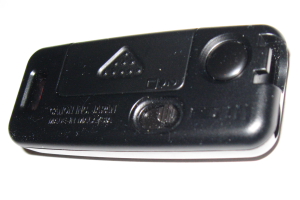 There are of course solutions. You could pester people who happen to be passing by and get them to take the picture. Hopefully you have a camera that is easy to operate or you’re in for trouble. The second solution is to use a tripod/rig your camera on a solid object and use the timer mode. Some camera’s let you set the time the camera takes between pressing the shutter release and it taking a picture which should give you enough time to get in the shot. Still how many times do you laugh when you see people running in front of their camera only to never know if it even took the shot or if they got there in time? Still another option is to hold out your camera in front of your face and take the picture. This always results in something laughable. Unfortunately many people do this and it results in what I call the “Myspace Syndrome” since that’s how most people on Myspace get their photos in their profiles
 .
.
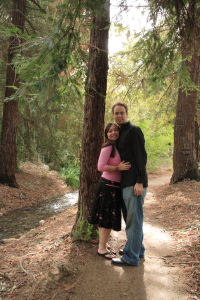
The third solution is the one I like. It involves getting a camera that supports a wireless remote and then purchasing the remote. I use the RC-1 for the Canon Digital Rebel XT. It’s a very simple device that works just like a television remote. It has a small infrared transmitter, a single button, and a mode selector. For the XT you simply put the camera in timer/remote mode and it will look for the remote. You can have the remote take a delayed picture or take the photo right away. I prefer the former as it allows me to hide the remote from the frame of the photo. As you can see in this photo I pretty well hid the remote behind Jamie.
Now the advantages of this method are many. Here are a few of them:
1) You don’t have to run from the camera to the scene
2) If you are the only subject of the photo then now the camera has something to focus on (assuming you don’t set the focus 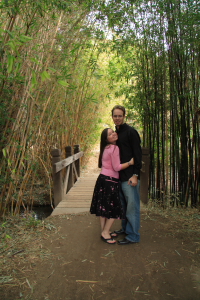 manually in which case you’re out of luck)
3) You can look way more relaxed in the photo
4) You can get great pictures with yourself in them and still get to claim credit for taking the photo as well
Now using a remote is not without issues. For this remote, since it is infrared, it works via line of sight. I know there are some remote systems that work behind walls/obstructions but those are a little more expensive and your camera has to support it. Other then that it is clear sailing. Look forward to having more photos in your collection that have you in them. I picked my remote up at Samy’s Camera but you can find them anywhere like B&H, Amazon, or NewEgg to name a few of my favorite establishments.
Rim of the World Rally
May 5, 2007
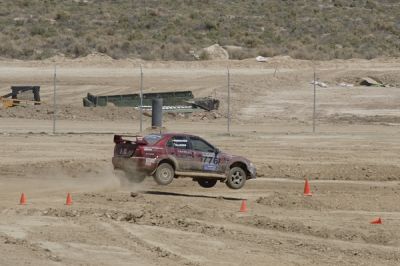
This past Sunday April 29th, 2007 Jamie, some friends, and I went to the Rim of the World Rally held this year in Lancaster, CA. The event itself was small for a Rally type event. It consisted of a single stage dirt course loop inside the fairgrounds and an autocross course setup in the parking lot with cones. The autocross course was open to the public and for a small fee anybody could take their car and set a time. The event was sponsored by Subaru so they dominated the selection of cars at the event. Still a Toyota Matrix and a Lotus Elise got good times on the autocross and the dirt rally course featured everything from a Ford Ranger to a VW Rabbit.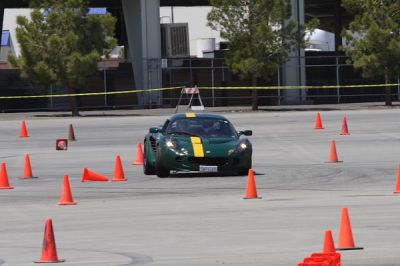
I shot exclusively with our 70-200mm lens. There were times when I wish I had a longer lens. Still this lens worked well outside. The temperature was high and the sun was bearing down on us. Shade was hard to find so we didn’t stay long. Still we captured some nice images.
Zoo Animals
February 18, 2007
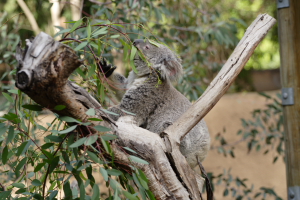 Something about taking pictures at the zoo is so cliche. Still going to your local zoo is probably going to be your best opportunity to take photos of a great vatiety of interesting animals. You could always go on a Safari in West Africa but think of the expense. Jamie and I recently went to the Los Angeles Zoo and took our camera’s along with us. We used our 70-200mm L lens as our walk-around lens and our SD550 for closer shots. This worked out well since most of the exhibits allow for a lot of space between the animals and the visitors (for obvious reasons). Most of the shots were in open shade while a few were in the direct sun and a few were in dark shady areas. The dark shade was the only thing that posed a problem for me. If an animal was in dark shade then chances were I would not get the shot. While I’m sure zoo animals get camera flashes in the eyes all day long I just didn’t feel comfortable using a flash plus I doubt it would light the subject the way I wanted.
The only other thing that inhibited me was the zoo’s use of fences. In this case I could still capture an image but the autofocus would always focus on the fence. I found it was best to use manual focus in this case. Using manual focus takes some getting used to. I will never be as fast as the USM autofocus on my Canon lenses but I’m getting better. With some practice you can pull a subject in focus in a second or two.
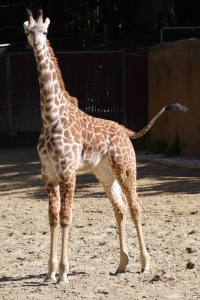
When I was shooting animals in direct sunlight I made sure to set the camera to expose the shot by one stop more then it thought it should expose. I know it sounds backards but if your camera is evaluating the whole shot with it’s light meter it will tend to underexpose the shot. The only time you might not want to set the camera to expose the shot more is if any part of the shot is washed out or the highlights appear blown. You can check this on the histogram if your camera provides one. If the chart looks like it is pushed up against the right and some stuff looks cut off then the exposure was too long and you should compensate accordingly.
This brings me to my last point. If you are going to purchase a Digital SLR camera and spend at least $1000 between the camera and all the related accesories then why not learn how to use it. While I was at the zoo I saw all kinds of people with cameras. At least 6 people had SLR cameras and of those maybe two knew how to use them. The rest were shooting in Auto mode. I could tell because it would pop up the flash everytime they took a picture. Now even I do not shoot in full manual mode except in a few special occasions but I almost always am in aperture priority or shutter priority mode. 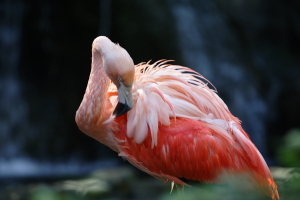 This allows me to control one aspect and let the camera use the light meter to choose the best setting for the other. If I want the flash I can manually pop it up. I also get some control over exposure compensation this way. If you own a DSLR or any SLR for that matter; do yourself a favor and invest some time into learning it’s features. Then go to the zoo and have some fun taking pictures of your favorite animals confident that you will get the shot.